Recently, a friend shared the wonderful news that they are in love! What struck me was how, no matter 'gay' or 'straight', people tend to indicate the intensity of their passion by how soon they talk about wedding, a house, and children together. As if two lives have converged into a straight, continuous line, and the anticipated future becomes evidence of their present love. So what happens when their love unfolds differently?
When the lineage of monogamous relationships begins to queer, we are at a loss to communicate what is even happening. We have far fewer narratives for alternative futures. There are rituals for engagements, weddings, anniversaries, baby showers; fewer for uncoupling beyond divorce, and almost none for transforming a relationship, for changing in intimacy, or redistributing care without treating the queering as failure.
Walking into a family home, I am seated in the living room. What's displayed on the wall are wedding photographs, family pictures, awards, holidays, pets and children. Some are formal and others more casual, all happy. The wall will disappear as an edge when I am no longer focusing on its object, but stay there as a timeless declaration.
Sara Ahmed wrote that such displayed objects make visible a fantasy of what makes a 'good life', and that fantasy is taken as a 'natural orientation'. Displayed objects signal what counts as a posture of love—it signals one's own preferred intimacy, timeline, and boundaries. As Ahmed puts it, "Bodies become straight by tending towards straight objects." Objects are directional. They orient a body towards a line and keep it moving along that line. To treat a line as 'common sense' is to assume that the world has always unfolded from this point, and forget that any line(age) is historically drawn and continually maintained: It is just one among many possible directions.
In this light, our story of heterosexual monogamy is a linear narrative of choosing and being chosen repeatedly by a singular, opposite-sex other, who is most worthy of our undivided devotion. Our missing half. It is also a story of lineage and inheritance:
To follow such a narrative is to 'honor' one's parental and ancestral line. It is to have some objects placed within reach and others unreachable, avoided, removed. Inheritance is presented as a social good—a gift. But a gift once given produces a debt that demands its return (Marcel Mauss). The child who refuses the gift becomes a bad debt; ungrateful; the origin of bad feeling.
Holding up such a narrative rests on two (mis)assumptions:
- (1) Desire originates deep inside an individual. This is a belief that yearning is a gap between an inner self and an external object.
- (2) Desire points toward a missing object. To desire something is to lack that very thing, and that lack can only be fulfilled by the desired missing other.
When desire is narrated as a lack located deep within oneself, feeling attracted to anyone besides your partner becomes a moral failing, and a verdict that your partner is "not enough". Thus when someone who loves polyamorously is with a monogamous partner, shutting that openness down becomes the "loving" thing to do. Devotion becomes measured by how much of yourself you're willing to give up, an echo of certain religious ideals where love is self-sacrifice and piety is proven through suffering.
In such a worldview, love appears as a problem of finding the "ultimate right object". Countless movies spin this narrative of desire into its gazillion shades. Some examples are the ongoing debate over whether love outweighs stability, whether you should follow passion or loyalty, and the glorious trope of unrequited love. These variations are generated from the implication that intimacy is the search for and possession of the one person who will complete the arc of one's longing.
As I wrote in Polymorphous Touching, this is a narrow reading of desire. Desire can simply be generative, it doesn't need to come from lack and doesn't need a fixed object.
Monogamy as a line(age) individualises desire by capturing circulation. When I visit old friends after a long time gone and we walk into a restaurant, the seating arrangement is organised around couples. I am careful to leave space for partners to sit beside one another while I sit next to mine. It would appear bizarre to request a swapping seat, even though I wish to rekindle my friendships given the short time I have with them.
After all, any line is not neutral. If we use Barad's terms, monogamy is an ethical, epistemological, and ontological cut. A commitment to any cut determines the shape of love, which body is included, where desire should land; It reorganises the movement of attention, touch, conversation, time spent and possible futures.
A commitment to monogamy resonates with a commitment to capitalist ethics. Affection is treated like a zero-sum game, it circulates less freely amongst friendships, strangers, kinship networks, to become concentrated within the recognised couple. As if loving one subtracts from another. The couple becomes the primary unit through which care is expected to flow, demanding with it temporal continuity, ideally until death. Like buying a house, the promise of exclusivity and permanence is essential.
The question should not be whether monogamy is '(un)natural' or true to our 'deepest self'. What is more profound to ponder upon is what kinds of worlds it makes possible, what other worlds it renders almost impossible to imagine. So long as we see monogamy as the moral, common-sense narrative of love, many questions get harder to ask: Which moments are forced to the front to preserve the story? What violence becomes easier to ignore? Which ways of relating become unintelligible? Which relationships become disposable?
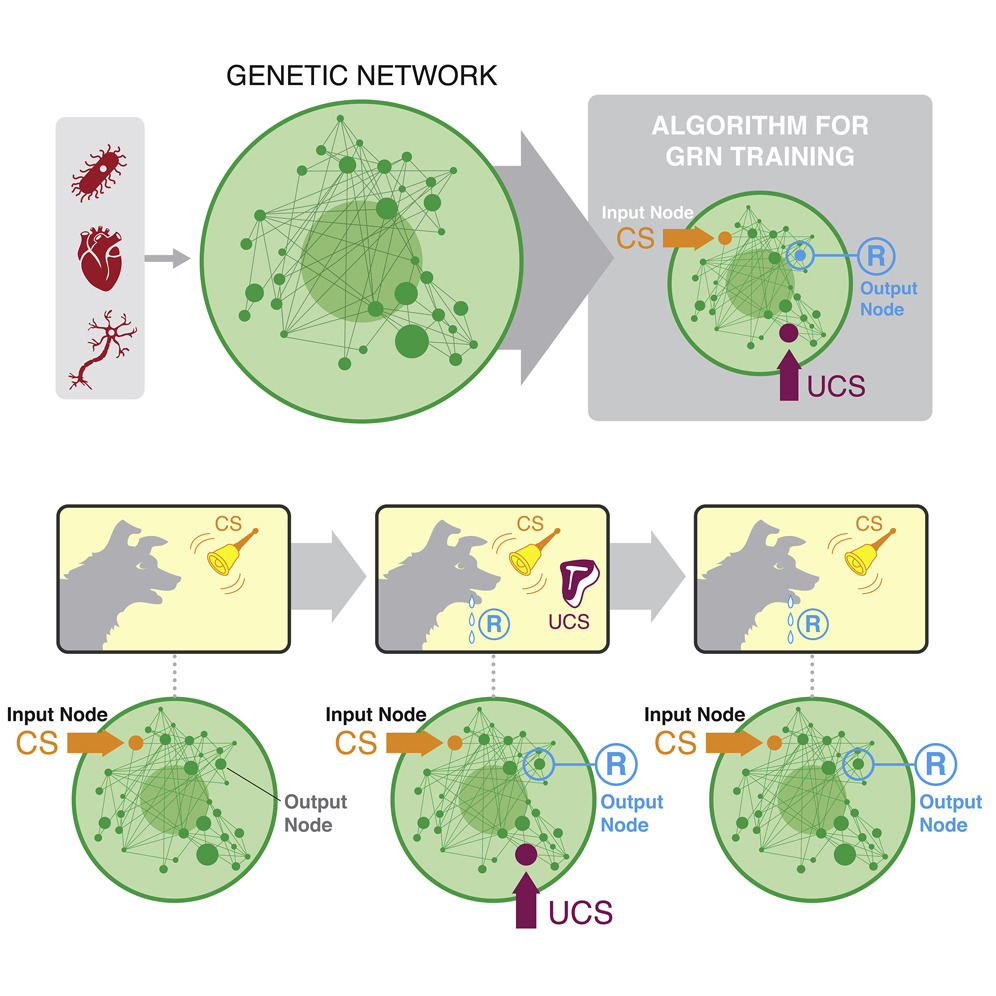 Biswas et al. (2021), iScience 24, 102131 より転載。CC BY-NC-ND 4.0。doi:10.1016/j.isci.2021.102131